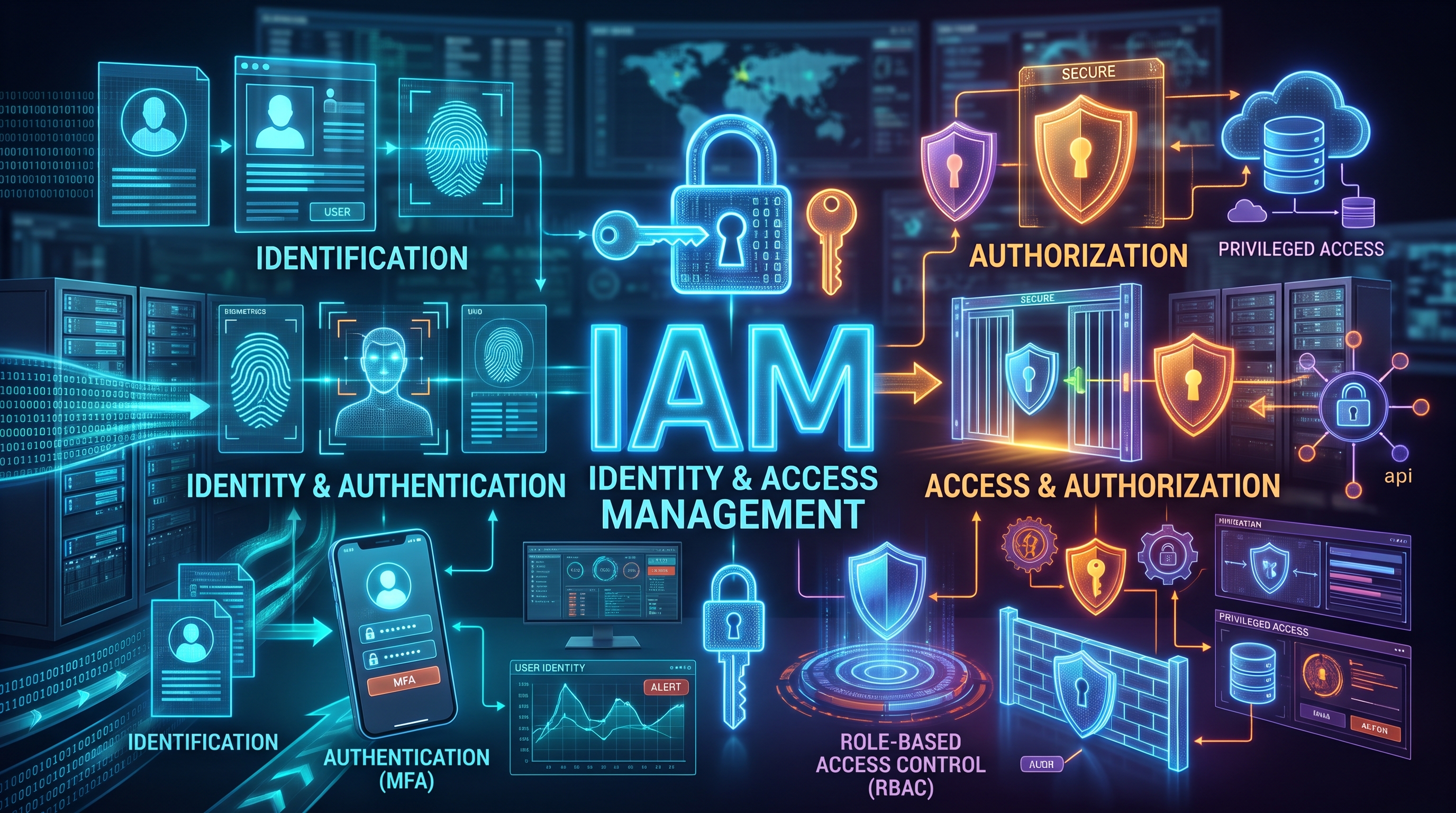
IAM (Identity and Access Management) is a framework of policies, processes, and technologies in cybersecurity that ensures the right entities (humans, devices, or applications) have the right access to the right system resources at the right time and for legitimate reasons.
In modern cybersecurity, IAM serves as the primary line of defense, shifting the focus of protection from mere physical network perimeters to identity management and verification.
Four Core Pillars of How IAM Works
- Identification: The process of recognizing and registering an entity's unique identity within a system, such as through a username, email address, or machine ID.
- Authentication (AuthN): The process of verifying that a user is truly who they claim to be, commonly using passwords, passkeys, biometrics, or digital certificates.
- Authorization (AuthZ): The process of determining access privileges and restrictions after successful authentication—governing which data, applications, or commands can be accessed, modified, or deleted.
- Accountability & Auditing: Recording all login histories and access privilege usage activities into system logs for forensic investigation and regulatory compliance (such as ISO 27001 or Personal Data Protection laws).
Key Concepts and Features in IAM
- Multi-Factor Authentication (MFA): Requiring more than one identity verification method (such as a combination of a password and an authenticator app) to prevent account takeover even if a password is compromised.
- Single Sign-On (SSO): Allowing users to log in once to access multiple integrated applications without having to re-enter credentials repeatedly.
- Principle of Least Privilege (PoLP): A security principle that restricts user access rights to the bare minimum, limited strictly to what is required to perform their job.
- Role-Based Access Control (RBAC): Managing access permissions based on a user's job title or role within an organization (e.g., Admin, Manager, or Viewer roles).
- Privileged Access Management (PAM): Dedicated management, monitoring, and restriction of accounts with high-level access privileges (such as server root accounts or system administrators).
Popular IAM platform examples:
Microsoft Entra ID (formerly Azure AD), Okta, AWS IAM, Google Cloud IAM, CyberArk (PAM specialist), and Keycloak (open-source).
A mature IAM implementation serves as the core foundation of a Zero Trust security architecture (never trust, always verify), while significantly reducing the risk of data breaches caused by credential theft or misuse.
About the author
- IT Infrastructure (network, server, cyber security, cloud, business continuity & disaster recovery).
Comments
Join the discussionNo comments yet. Be the first to comment.